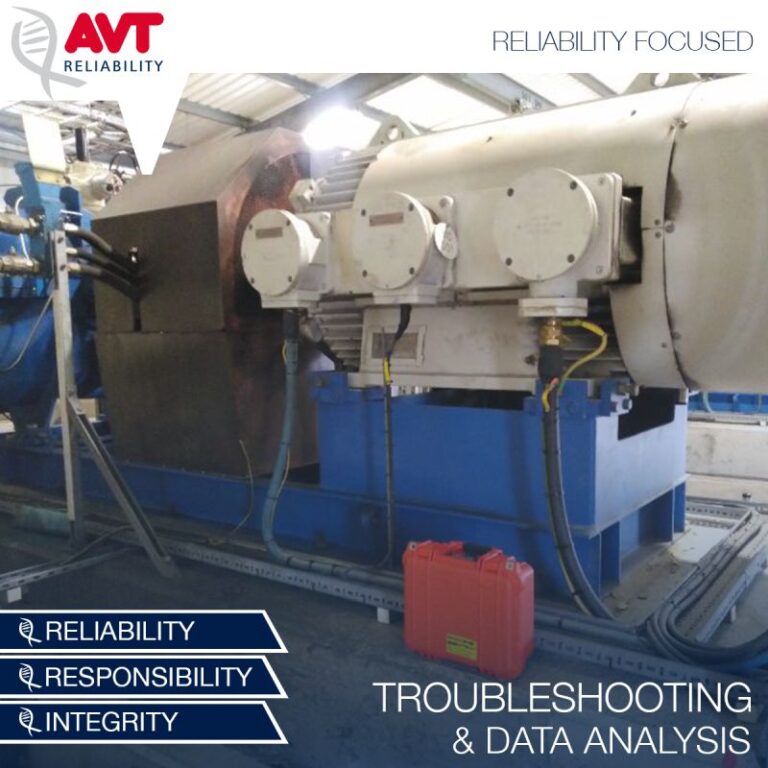
Centrifugal Pump Vibration Troubleshooting: A Practical Diagnostic Workflow
Centrifugal Pump Vibration Troubleshooting: A Practical Diagnostic Workflow
High vibration on a centrifugal pump is a symptom, not a diagnosis. The same increase in vibration can be caused by imbalance, misalignment, looseness, bearing deterioration, hydraulic instability, structural resonance or a combination of factors.
For site-critical pumps, replacing components on suspicion alone can create unnecessary cost and still leave the original problem unresolved. Effective centrifugal pump vibration troubleshooting therefore starts with a structured diagnostic process.
Start with the operating context
Before interpreting vibration data, it is important to understand how the pump is operating. Engineers should consider whether the vibration is constant or intermittent, whether it changes with flow or load, whether the problem appeared suddenly or developed gradually, and whether maintenance or process changes occurred beforehand. This operating context can immediately narrow the investigation. A vibration increase that tracks process conditions may point in a different direction from one that remains stable across the operating range.
Measure the vibration properly
Vibration measurements taken while the pump is running can reveal the frequencies, directions and amplitudes associated with the problem. Overall vibration gives a useful indication of severity, but the frequency spectrum and supporting phase or waveform data help identify the likely source.
Different faults often produce different patterns. Imbalance may appear strongly at running speed, misalignment can create characteristic axial and harmonic behaviour, looseness can introduce multiple harmonics, and bearing defects may produce higher-frequency fault components. The objective is not simply to find a high number. It is to understand what the vibration is telling you about the machine.
Check the whole machine train
A centrifugal pump should not be considered in isolation. The motor, coupling, baseplate, pipework and surrounding structure can all influence measured vibration.
High vibration at the pump may originate from misalignment between driver and driven equipment, soft foot, looseness in the base, pipe strain or resonance in the supporting structure. Hydraulic effects such as cavitation or operation away from the best efficiency point can also generate vibration that may initially look mechanical. This is why experienced troubleshooting often combines vibration analysis with visual inspection, alignment checks, process data and other measurements rather than relying on one technique alone.
Separate the fault from the consequence
One of the most common troubleshooting mistakes is replacing the component showing damage without asking what caused that damage.
A bearing may be deteriorating, for example, but the underlying cause could be misalignment, looseness, lubrication problems or excessive hydraulic load. Replacing the bearing may temporarily restore the machine while leaving the condition that caused the failure untouched.
Reliability engineering becomes important at this stage because the goal is to move from identifying the damaged component to understanding the mechanism behind the failure.
Use the evidence to plan corrective action
Once the likely cause has been established, the maintenance response can be targeted accordingly. That might involve alignment, balancing, bearing replacement, correcting looseness, improving lubrication, addressing pipe strain or reviewing pump operating conditions.
For critical assets, this evidence-based approach helps avoid both extremes: continuing to run a pump with a developing fault, or carrying out unnecessary intrusive work because the true condition is uncertain.
Verify the result after the work
Troubleshooting is not complete when the maintenance task is finished. The pump should be re-measured under comparable operating conditions to confirm that vibration has reduced and the original fault signature has disappeared or improved as expected.
Post-maintenance verification is particularly important where several corrective actions have been carried out at once. Without a follow-up measurement, it is difficult to know whether the root cause was actually addressed.
Build the findings into future monitoring
The investigation can also improve future condition monitoring. Baseline data taken after a successful repair gives engineers a useful reference for subsequent surveys, while recurring fault signatures can help refine alarm levels, inspection intervals and maintenance strategy.
AVT Reliability uses vibration analysis across pumps and other rotating equipment to support troubleshooting, condition assessment and predictive maintenance decisions. By combining measured machine behaviour with engineering interpretation, teams can move from reacting to high vibration to understanding what is causing it and what action is actually required.