Why Visual Inspections Still Matter in Condition Monitoring
Visual condition monitoring.
Visual inspection is one of the simplest condition monitoring tools available, but it can also be one of the most valuable. A well-designed inspection can identify leakage, damage, contamination, loose components, abnormal readings and other developing issues before they become failures.
The challenge is making inspections specific, repeatable and actionable.
Avoid vague inspection tasks
Instructions such as “check the pump” or “inspect the motor” leave too much open to interpretation. Different engineers may look for different things, record findings in different ways or overlook a known failure mode.
More useful instructions ask for a defined observation or measurement, for example:
- Check for signs of leakage around the pump
- Compare motor sound with the previous inspection
- Record pump inlet and outlet pressure
- Capture an image of the gearbox oil level
- Inspect the motor casing and cooling fan for damage
This creates a consistent task that can be repeated and compared over time.
Record findings and close the loop
An inspection only creates value when the result is recorded, reviewed and followed through. Defects need to be assigned, tracked and closed rather than remaining as isolated observations.
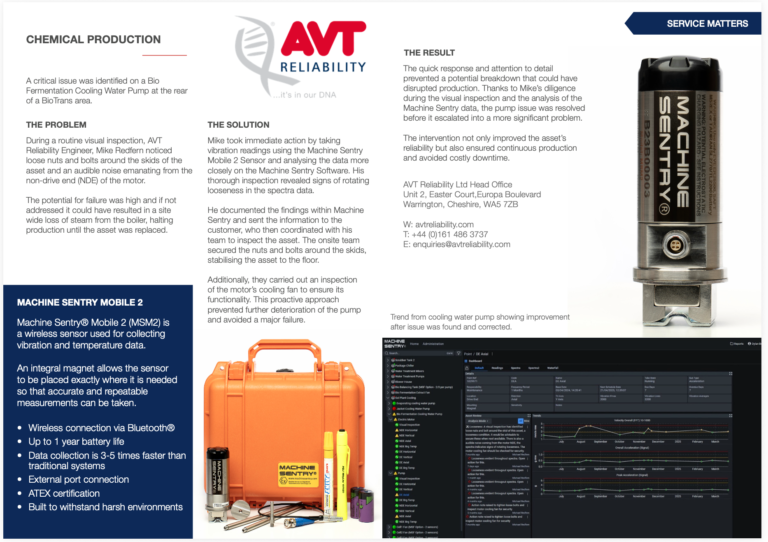
Within Machine Sentry®, visual inspection findings can sit alongside vibration data, lubrication activities, oil analysis, process readings and maintenance history for the same asset. Bringing these sources together gives engineers a clearer picture of condition and helps connect early observations with wider changes in asset performance.
Advanced technology does not replace good observation. Effective condition monitoring combines appropriate data sources with clear tasks and disciplined follow-up. In many cases, the first warning of a problem is still something an engineer can see, hear or record during a structured inspection.